
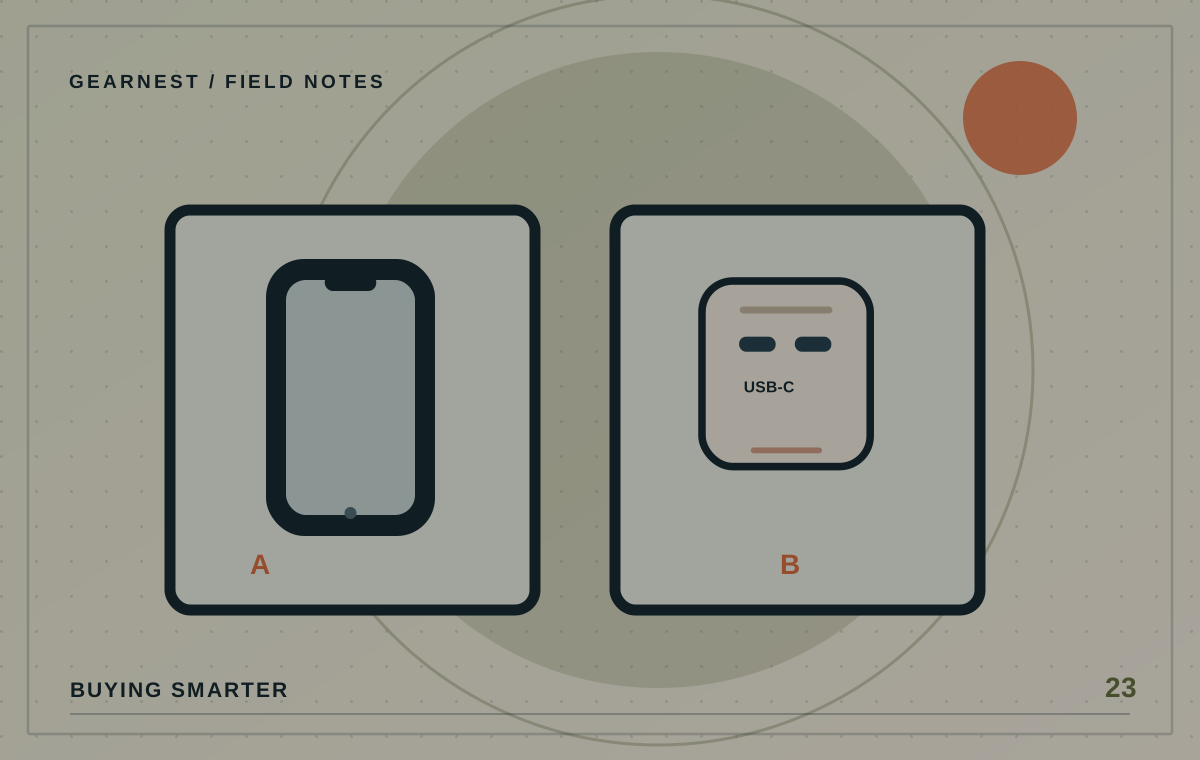
Product pages are excellent at listing features and less helpful at explaining whether those features will matter in your home. Before opening another comparison tab, decide what job the item must do, which compromises you can accept and what evidence would actually change your mind.
Compare must-haves, credible evidence and total cost—not total features.
Write one sentence about the job
For example: 'I need a charger that can power my laptop and phone together at a small desk.' That is a stronger buying brief than 'I want a great USB-C charger'. The sentence tells you what specifications to check and which products to ignore. If you cannot describe the problem, delay the purchase until you can.
Make must-haves different from nice-to-haves
Put compatibility, safe operation and dimensions in the must-have column. Extras such as colour, an app or a display might be nice but should not compensate for a critical mismatch. Limit the shortlist to a manageable number. A comparison of three suitable products is usually more productive than a grid with twenty vaguely relevant ones.
Use evidence matched to the claim
A specification sheet can verify dimensions and supported ports. A credible hands-on review can reveal build quality, noise or real-world behaviour. Consumer-protection information can help explain rights and warranty limitations. Be wary of undisclosed sponsored placements, unverifiable 'best ever' rankings and reviews that never describe how a product was used.
Compare the cost of ownership
Consider cables, cases, replacement pads, maintenance, power consumption and repairs when relevant. A cheaper device that requires expensive proprietary accessories may cost more over time. Equally, paying a premium for features you never use is not a saving. Keep the comparison tied to your real budget and actual use.
Make the final choice reversible where possible
Read the retailer's change-of-mind policy and your Australian Consumer Law rights before purchase. Keep proof of purchase and document the exact model. If two options meet your real requirements, choosing the simpler or better-supported one can be more sensible than continuing to optimise minor specifications.
Write the reason you would return it
Before choosing between two products, imagine opening the box and finding that the purchase was wrong. What is the most likely reason: the charger cannot power both devices, the stand does not fit the desk, or the bag is uncomfortable? Put that risk at the top of your shortlist and look for evidence that addresses it. This reverses the usual marketing logic by testing suitability before celebrating extra features. It also makes return conditions easier to evaluate.
Before you choose
- Write one sentence describing the exact job.
- Mark essential compatibility checks separately from bonuses.
- Compare evidence quality, costs and returns.
Letting a large feature count distract from an essential compatibility problem.